Saturday, June 24, 2006

Running in Singapore - The Starbucks Run

Saturday morning in Singapore means the "Starbucks Run". The Starbucks Run follows a paved river trail right through the heart of central Singapore. I highly recommend this run to visitors to Singapore. We start on River Valley Road and follow the Singapore River out to Marina Bay , taking us past Clark Quay and Boat Quay, the Singapore government's Disneyesque restaurant redevelopments. In the evenings the path is filled with tourists, but at 7:30am it is completely empty other than a dozen runners, a handful of Falun Gong adherents, and a few elderly strollers.

7:30am may seem early to start a run. I am not a morning person and 7:30am seemed way too early to run. However given Singapore's heat, 7:30am is on the late side. Half of our group this morning had already completed a 40-kilometer cycling workout before even starting the run, otherwise we would have started even earlier. In Singapore, which sits very close to the equator, the sun rises at roughly 7am and sets at 7pm every day of the year, and most runners in Singapore begin their workout at 7am or a bit earlier.

The Starbucks Run provides excellent views of Singapore's modern skyline, colonial architecture, the planned multibillion dollar integrated casino resort, and the Merlion statue. Unfortunately the Merlion is being cleaned today (so after traveling 7,000 miles I don't see the Merlion..)

The Starbucks Run is an out-and-back course, and this morning some of the group turned around after about 4-kilometers, but Brian, Mika, John and I pressed on to the East Coast Highway Bridge at 5.25k before turning around. See the map created by Brian of the course (satellite image only).

After the run we cooled off in the spectacular pool at Mika's apartment complex before heading for post-run pastries and beverages at a certain Seattle-based coffee chain. After waking up early and doing the scenic but grueling run, it was a welcome sight to see a grande latte.

Monday, June 19, 2006

Triathlon Gear Review

It is time for the post-Ironman gear review.

I am really not the gear geek that many of my colleagues are. This is partly because on my part-time work schedule I lack the financial resources to purchase all the requisite hardware. Nonetheless over the past few years I have somehow managed to cobble together enough equipment to make it through ironman. Here are some comments about notable items -


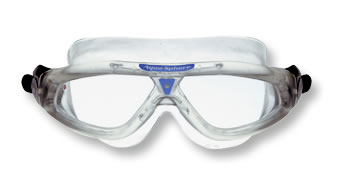
1. Aqua Sphere Swim Goggles - Goggles are a big concern for me. I struggle with visibility in the water and I wear contacts so I am preoccupied with water leaking into my goggles. None of the market leading swim goggles (Speedo, TYR) ever seem to fit my face. I had high hopes for the Aqua Sphere Goggles after reading that they are the number one ranked goggles among triathletes, and hearing an aggressive sales pitch in New Zealand. The Aqua Sphere goggles did live up to expectations in terms of 180 degree peripheral visibility and adjustability, and they felt reasonably comfortable. However they still left huge indentations in my face (it is always bad for me to look like a raccoon when I return to the office after a lunch swim). Moreover they occasionally leak meaning I did not feel comfortable relying upon them for Ironman and wore my trusted old pair. The Aqua Sphere goggles would definitely be worth the premium price if they fit my face - perhaps they work well for other people.
http://www.aquasphereswim.com/products/sealxp_clr_clr.html


2. Gel Kinsei - I have run over 700 kilometers on pavement and mountain trails on the Kinsei and they are still simply the most comfortable shoes I can ever remember (and I go back to original Nike Waffle Trainer). Great cushion and stability. Granted you trade off some weight and flexibility -- I tortured over whether to wear them for the Ironman marathon, but with my 3:30 goal pace I did not feel I would need to gain any speed with racing flats and would simply subject my exhausted legs to more pounding.
http://www.asicsamerica.com/kinsei/


3. Shimano TRO2 - My snobbish cycling friends actually approved of these shoes after making many condescending remarks to me about my old touring shoes. Yes the Shimanos are light and stiff. Problem is that the velcro strap on my right shoe constantly folds backwards and rubs against the crankshaft on every turn of the pedal. This friction can't help my speed. (maybe I will switch back to my reliable touring shoes).


4. Bento Box Bike Bag - This is very clever. And so crucial for storing gels. I just wish it was bigger so I could fit my mobile phone and more food.


5. Polar S150 bike computer and HRM - I truly hate this product. The manual is totally incomprehensible. Straps were broken straight out of the box. The watch visibility is poor, the buttons clumsy. I have nothing good to say about this piece of dog turd.


6. Orca Predator Wetsuit - Great buoyancy, warmth, and durability. And it looks cool. I do seem to lose a lot of freedom of motion with the long-sleeves, but I would buy the same long-sleeve model again

Sunday, June 18, 2006

Bike Training in Rainy Season

They say you never forget how to ride a bicycle.

But I am getting worried.  I have only had one real training ride since early May.  

It is rainy season in Tokyo and each time I set aside the requisite 3+ hours for cycling it has been pouring down rain.  I don't hesitate to run in the rain, but I am not willing to risk my life on slippery crowded streets.  At least I managed to get in 3 swim workouts this past week, a spin session and some solid running. 

I am just concerned that when I finally get back on my bike I will have completely forgotten how to ride the thing.

Wednesday, June 14, 2006

Roppongi Hills Spa

My mailing address says Tokyo, Japan, but I actually live ensconced in an expatriate bubble, and my day-to-day existence rarely provides any cultural insights on Japan. However exercising at various "spas" or "health clubs" in Japan, Asia, Europe and the US over the past year, I could hardly help but ponder the extraordinary contrast in how the local people behave at the different facilities.

Much of my training these days is at the Roppongi Hills Spa, the one luxury in my otherwise ascetic existence. I spent some two hours at the Roppongi Hills Spa yesterday and during the hour I was in the swimming pool I did not see a single other swimmer. After the swim I spent 45 minutes in the exercise room which I shared with only two other members. But then I head to the showers and suddenly it is wall to wall people. In the 15 minutes I spent hustling through my shower, I counted nine other guys. Guys gingerly cutting nose hairs, guys applying face lotions, guys lovingly blow drying their hair, guys languidly washing themselves before their bath, guys soaking in the bath, guys languidly washing themselves after their bath, guys toweling, guys sleeping... This practice of bathing is apparently a highly refined art in Japan, an art whose relaxed pleasure continues to elude me.

Contrast this with the "spa" I went to in California recently. Actually in America we would not call this kindof facility a spa. Americans go to "athletic clubs" or "health clubs". The Redwood City Athletic Club possesses all the same facilities -- pool, exercise, sauna, restaurant as the Roppongi Hills Spa. But us Americans (at least the males) hastily change our clothes and spend our time rigourously swimming, lifting weights, playing basketball, spinning. It is a grim, goal-oriented, time-harried crowd. Showering is a perfunctory thing. The shower facilities are rather spartan and do not always smell particularly nice, but even if they were as luxurious as Japan's, people are in too much of a hurry to care. Too much of a hurry to chat much either. More than half the people are wearing i-pods at the Redwood City Club anyway.

Now contrast this with the spa I went to on a business trip to Germany. As usual I was preoccupied with completing my swim and bike workout programs. But all around me the people were wading and floating in waist-high water, holding drinks and socializing with one another. I felt like I was at a huge poolside cocktail party. Nobody else was wearing goggles or doing laps.

Now that the ironman is over and my training requirements are less time-intensive pehaps I can relax a bit more at the spa? I doubt it, I am too American I guess in this respect.

Sunday, June 11, 2006

Ironman recovery


Apparently most ironman finishers experience a "cavern of despair and disorder" after ironman, an "inevitable sense of letdown and purposelessness".   Well in my case I have no time for this cavern of despair - I have to start thinking about the Lake Stevens 70.3 triathlon on July 23 and the all-important Fire Festival 10k Run in August.    Anyway I had my despair and purposelessness after New Zealand Ironman fiasco.

So now I am just wondering how quickly I should start training again.

 The rule of thumb on straight marathon run recovery is one day of recovery for each mile of the race - so almost a month of recovery for the 26 miles of a full marathon.  This formula would imply what?   Over three months of recovery for the 140 mile ironman event? 

I am thinking of this recovery as a "reverse taper".  So last week (the 6 days after the ironman) I did  a total 2:15 hours of training - a 5k run with Jayne, an hour spin and a 45 minute swim.
This past week I did 7 hours of training, (a spin session, two swims and three runs).  One of the runs was a 6x1000 track workout wherein I pushed to sub 3:20 on 3 of the 1000s.  Perhaps this was too fast too soon?

As usual I am not doing enough cycling.   It is raining in Tokyo so I abandon plans to ride at  the dreary Oifuto Sunday cycling mecca.


Monday, June 05, 2006

Ironman Japan - Analysis

With a week to reflect, here is a bit of postrace analysis:

1. Should I have pushed myself harder on the bike?
I know, it is easy to say now, sitting here in comfort, largely recovered from Sunday's event. And taking it easy on the bike was my core, pre-race strategy (my only real pre-race strategy for that matter). Still I am inclined to think a 10% increase in bike effort would result in less than a 10% reduction in run performance. On the other hand, 10% extra effort on the bike might result in a dramatic reduction in pure Ironman event enjoyment (as I recall from Wildflower triathlon).


2. Why did I "hit the wall" during the final few hundred meters of the run?
a. I simply bonked - in other words I stopped eating too soon
b. My 4:15 per kilometer surge on kilometers 37 and 38 caught up with me
c. I abandoned my walk/run strategy at 37k
d. Cumulative effect of the whole 12 hours
e. Lack of really long training runs
f. Mental weakness - Soft, suburban, American upbringing
g. I subconsciously decided to create a more dramatic story and more interesting pictures for my blog
answer - all of above?

3. Why was the ironman so much easier for me than the Wildflower half-ironman 4 years ago?
a. Better training, particularly the long bicycle rides
b. Nutrition - I was conscious to eat much, much more at IM Japan
c. Weather - The 80 degree F. California midday run zapped me at Wildflower
d. Run/walk tactics
e. Slower bicycle pace
answer - These past 6 months I have been focused on bike training to avoid the struggle I had at Wildflower, and I definitely noticed improved condition in December and January. But I think nutrition, weather and run/walk tactic also helped.

3b. Which is more difficult - Ironman Japan or the Obuse half-marathon?
answer - Definitely the Obuse half-marathon is more difficult. The Obuse half-marathon is run in late July in a valley north of Nagano, Japan where the conditions are mind-boggling humid. The Obuse course zigs and zags through dusty fields and in the end passes tantalizingly close to the finish line creating a cruel mental torture. Last year every step beyond the first 2-kilometers was absolute misery for me.
You might argue that Obuse is only 80 minutes of pain versus 12 long hours for Ironman Japan. However it is 80 minutes of sheer hell versus 12-hours of alternating periods of mild discomfort, giddy euphoria, and general fatigue.

4. How much did cool weather help me?
So many of triathlons are held in hotter climates and the half-ironman distance means doing the run in the middle of the day. The 15k run at the Saipan triathlon was a real slog for me because of the heat. So am I doomed at Sado in early September?

Wednesday, May 31, 2006

Ironman Japan - Run


Of course it is a bit disconcerting when on the first few steps of running a marathon your legs buckle beneath you and you almost fall on your face. As I changed my shoes in the transition tent I had tried to psyche myself up saying 'OK Jay -- it is showtime - you are in your element now'. Then when I burst out of the transition area, the impact of 7 hours on the bicycle caused my muscles to lock up. Fortunately within a few kilometers I was running just under 5-minute pace.

From the very start of the run all the way to about 35 kilometers I consistently ran for 5 minutes then walked for 20-seconds. Only once (in a 30k workout) had I previously attempted this run/walk tactic, but it proved extremely effective. Mentally it was helpful to break the long run into smaller chunks and tell myself 'OK one more minute and you can walk.' Physically I realized a boost of energy almost every time I came off my walk intervals. In fact if I had to do the event over I would include another walk interval in the last 7 kilometers. The biggest challenge of this tactic was seeing the shock and dismay of spectators and my fellow participants. They were particularly shocked since I was running faster than the other triathletes around me so people were encouraging and cheering me on and they seemed so surprised when suddenly I would slow down and walk. One other runner implored me "Keep your pace, keep your pace, you can do it" and one group of women who had been jumping up and down cheering for me seemed almost angry when I suddenly started walking right as I passed by them. "Doshita? Fighto, Fighto (what the heck is the matter with you?)"

Aid stations at Ironman Japan were plentiful - maybe every 2 kilometers. And I took food and drink at almost all of them. It was amazing how much I ate -- muffins, bananas, fig newtons, orange slices, Ritz crackers, chocolate... More amazing was the quantity of Coca-cola I drank. Coke after coke after coke after coke. How on earth could my stomach possibly tolerate all this coke? Especially after all the ocean water I had swallowed during the swim followed by 4 Power Bars, 6 gels and countless bananas on the bike. I kept thinking I should probably cut back on my cola consumption, but as I approached the aid station the craving for coke became so strong - on several occasions I even grabbed one cup at the start of the aid station, drank it, then grabbed a cup of water and second coke at the end of the aid station.

I felt fine through the first 17-kilometers then struggled until the halfway mark. When I started the course's second loop I felt a psychological boost knowing I was on the final leg (or maybe the boost was just all the caffeine kicking in...) My plan was to pick up the pace at 35k. My plans prior to the Ironman were extremely vague - I had absolutely no idea how I might feel and what pace I should run. Nonetheless I somehow did pick up the pace to about 4:15 per kilometer at the 35k mark as well as abandon the 20-second walk intervals and cease stopping in for treats at the aid stations.

I have done a fair number of endurance events over the years and have developed a pretty good sense for expending just the right amount of energy to make it across finish the line. Somehow last Sunday I miscalculated. Maybe it was being sent on a 500-meter wrong way repeat loop at the 40k mark, maybe I stopped walking too soon, maybe I stopped eating too soon, or maybe the whole 12 hours of swimming and biking and running were going to take a final shot at me no matter what..

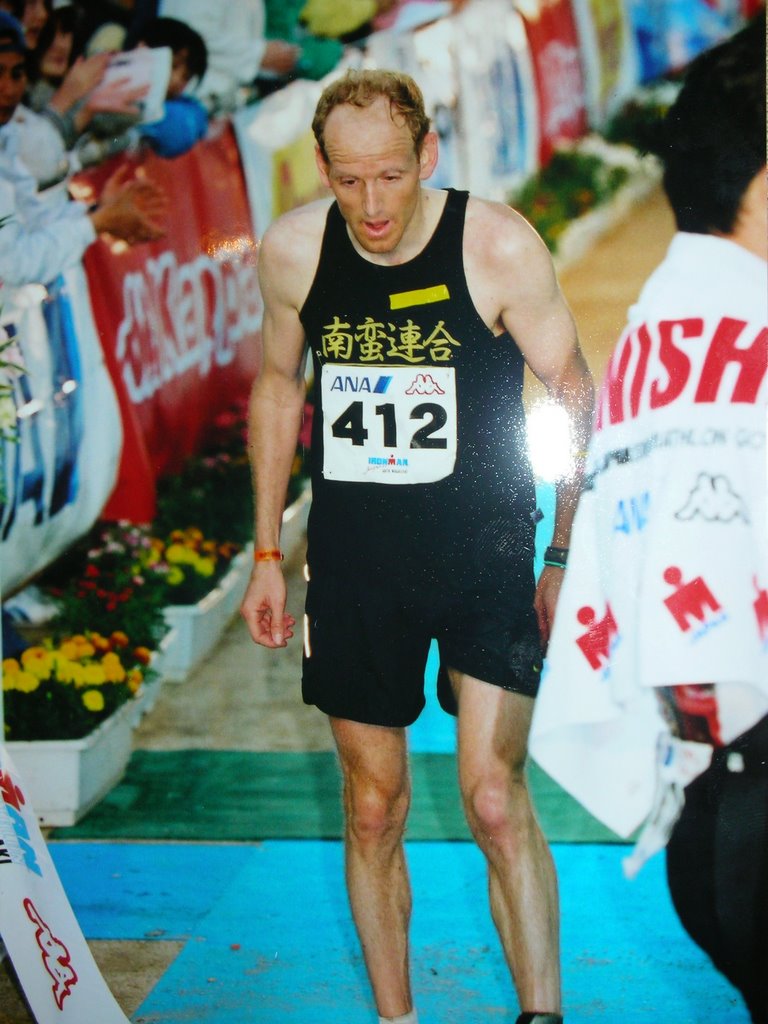
As I speeded up over the final few kilometers I could feel my energy draining, but I had hopes of breaking 3:30. I kept felt a bit weaker at 40k, then much weaker at 41k. I could see the castle walls where the Ironman finishes - less than 800 meters to go. And then the lights started to dim.. I saw stars and squiggly lines shooting across my field of vision. I staggered and begun to weave a bit and I have a fuzzy memory of people asking if I was OK. I reached the gate of the castle and there with less than 300 meters left I started envisioning a repeat of the famous Julie Moss 1982 Ironman finish where she crawled down the final stretch. I calculated that I had some 3 hours to crawl a few hundred meters and still beat the 15-hour cutoff. Inside the castle grounds it seemed incredibly dark, though I could hear music and crowd and see the bright lights of the finish area only a few hundred meters ahead of me and around a corner. I somehow walked to the turn and willed myself to jog down the finish stretch in front of the bleachers filled with cheering spectators. As I shuffled down the final stretch I managed to feebly gave high-fives to all the people expectantly holding their hands outstretched. Volunteers hold up a finish banner for each finisher but I was too weak to even run through it. The medical staff rushed over and carried me to a chair in a tent where Keren and Mitsu came over. Later they described me as being in a "catatonic" state.

Later that evening I would watch hundreds of other people finish Ironman - every last one looking much stronger than me -- much, much stronger. In fact most of these finishers were not just running down the final stretch, but hopping and skipping and doing acrobatic victory dances I stood there propped up against the finishing chute, clapping for the other finishers, celebratory music blaring, my Ironman towel wrapped around my head. It was then that the sense of accomplishment (and relief) began to wash over me, and all the winter rides on the Arakawa, the New Zealand ordeal, the evening Palace runs, the hard swim squad workouts, all became more than worthwhile.

Ironman Japan - Bike


"Enjoy your Ironman experience."  That is the most frequent advice I heard from the Ironman pros when they are asked to give advice to first-timers like myself.

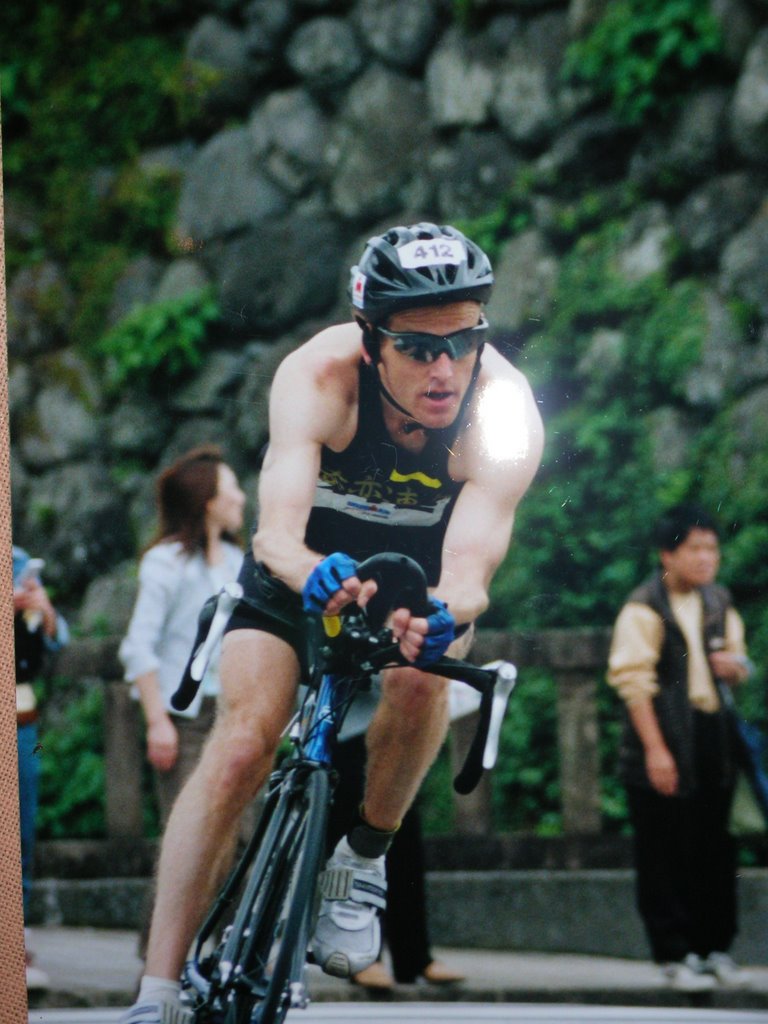
And I made a point of enjoying the scenery of Goto Island during the 180 kilometer ride.   Much of the course is along the coastline and through forested hills.  I figured there is no reason to approach the event as a death march, and in fact I found most all of the 7 hours on the bike to be quite pleasant.

We got doused by rain early in the ride, but after that the weather was fine with only a light wind and mostly cloudy skies.

The first few kilometers I was still dazed from the swim, but eventually I picked up the pace, and hit the 60-kilometer mark in just over 2 hours, which is much faster than my training pace.  I was a little concerned at this point as my butt and back were starting to get uncomfortable and two-thirds of the course was still ahead including the most hilly sections.    Prior to the ironman I had been concerned about the hills, but the hill at the 30k mark came as a relief from the constant cycling motion on the flat areas.  It felt good to stand up on the saddle and the downhill sections were not too steep.

As I write this three days after the Ironman event is over I find myself pondering whether I could have pushed myself harder during the bike.   Given my limited bike training and struggles at the Wildflower Half-Ironman 4 years ago, my firm plan prior to Japan Ironman was to take it easy on the bike, and I kept telling myself not to push too hard on Sunday.  But other triathletes seem to be more aggressive on the bike with limited ill effects.


Ironman Japan - Swim


At a certain core, primal level I am simply scared of open water.  There is something ominous about the ocean and each triathlon I have done has entailed an effort to overcome my fear.   Eight years ago I entered my first triathlon and struggled to deal with panic and merely complete the tiny 400 yard course in a calm California lake.

So my 1:27 swim time at Sunday's Ironman is my biggest triumph of the day even though the swim is widely considered the shortest and easiest component of the Ironman. 

I was remarkably relaxed prior to the swim.  Fortunately the ocean was very calm at 6:30am, though it would get choppy later.   The temperature of the water dominated pre-race discussions, but I found it a non-issue (19 degrees is plenty warm).   Ironman Japan is a deep water start and I had been concerned about needing to tread water for awhile, but when you are wearing a wet suit in salt water you can  float indefinitely without expending much energy.   I inadvertently positioned myself in a good position for the start on the inside of the inner rope and when gun went off  I was not immediately caught in the "washing machine" effect of hundreds of swimmers thrashing and kicking each other.  

The Ironman Japan swim course is essentially an out-and-back course that the athletes complete twice.  At the first turnaround my inside position worked against me as I tried to maneuver around the buoys with dozens of other swimmers crawling over me. 

Much of the swim is a blur of struggling to avoid colliding with other swimmers and thus be able to focus on the techniques our Swim Squad coach Greg  emphasized.  As the swim progressed the water became rougher, and the second return leg required more effort to catch a breath and see the buoys.   Oddly, the two hardest parts of the swim were:
1.  The section between the two loops where athletes run around a cone on the beach and re-enter the water -- I thought I was going to throw up and it felt good to be back swimming again
2.  The final 300 meters.  I could hear the taiko drummers on the beach, but it seemed to take forever to finish the swim.   Later I learned that their was a current along the shoreline pushing against us.

It seemed to take forever to finish the swim.  But my swim pace on Sunday was much faster than any other triathlon I have done even though the distance was much longer.  At the Wildflower half-ironman it took me 47:29 to complete 1.9-kilometers in easier conditions.   It was nice to finish the swim in almost the exact middle of the pack and see so many bicycles still in the bike racks during the transition, unlike my earlier triathlons where my bicycle looks so lonely..


Saturday, May 27, 2006

16 hours until Ironman Japan

 
The afternoon before my first ironman effort finds me surprisingly relaxed.  Maybe it is the fact that the weather forecast anticipates wonderfully benign conditions - cool cloudy weather and reasonably calm water.  Or maybe it is the fact that my teammates here have more legitimate concerns than I do - Stu is suffering a chest cold, Kerens bike cleat broke off his bike shoe, Paul and Nakamura-san have not trained at all in the past 3 months.   As inadequate as my training has been these past 3 months, at least I have done a handful of good workouts since returning from New Zealand.  And I have my coffee.  And I got a full nights sleep last night at the boxy Shato In Fukue -- think Chateau Inn.  
 
A large group of us just did a protein-loading lunch at a famous Goto Beef Steak restaurant.  I found this to be a strange culinary choice, but these people have done many Ironman races before, so I dutifully ate my steak.  Well actually I only ate half of it, I did not want to dramatically change my diet so much immediately prior to my first Ironman. 
 
At the orientation session last night, the race director spent half the time talking about cut off times.  I found this a bit disturbing - one because it makes me nervous about missing the cutoff times myself, and two because I have become annoyed at many Japanese events with what I think is an over-emphasis on cutoff times.  At NZ there was barely a mention about cutoff times.
 
People ask me my goal, and I really have no idea what to say.  I had grown ambitious in the days and weeks before New Zealand, but after my struggle on the bike there, I think it safe to just concentrate on going out slow on the bike.  Especially since the big surprise is hearing people talk about hilly the bike course is.


Thursday, May 25, 2006

Sleep - Part 2


So with some sixty-odd hours to go until the Ironman, my mind is not focused on race goals, tactics, nutrition, packing or last second workouts.

Rather I am worried about getting enough sleep.  It has been a hectic week so far with a business conference and various personal hassles,  I am already starting to feel unusually sleepy and worn out.  I am sure that this is partly a psychological matter as my mind starts to contemplate Sunday's activities.  In the past my body seems to have anticipated these endurance events, and shut down in advance to gain some extra rest.

The one comforting thought is comparing this week before Ironman Japan with the travel odyssey of going to Lake Taupo New Zealand in March for the NZ Ironman.  In that case I woke at 5am on Wednesday morning to catch a painfully early, 7-hour flight out of Narita to Bangkok, where I transferred to a torturous overnight flight to Auckland New Zealand, followed by a long frantic drive on Thursday afternoon to the triathlon site, arriving just in the nick of time to register for Saturday's race.

Tomorrow morning I merely need to go catch a 2-hour flight followed by a 90-minute ferry boat ride. 

Foolishly I joined the Namban team's track workout in the rain last night.   I kept expecting the horrific thunder storm that hit Tokyo to blow over, but it only got worse and I did 800, 600, 600, 400 with Steve Lacey in torrential rain with lightening crashing down nearby.  The workout itself was OK.  I am supposed to train very hard in brief spurts this week.  According to research, these short intense workouts the week before the race will increase the mass of my muscle mitochondria allowing me to burn more lactic acid on Sunday so my muscles will work harder and longer. 


Caffeine - Part 2


The monkey is on my back again.   I am hitting the coffee and hitting it hard - a short Peet's Lost Sumatra Roast in the morning,  a large Cafe Veloce Americano in the afternoon...  I knew I hit bottom again today when my head started to ache during a tedious business meeting because I hadn't had any coffee after lunch - I was forced to brew some dreadful industrial bulk coffee.

Prior to the New Zealand triathlon I managed to reduce my caffeine consumption to less than half a cup per day, and I was poised to enjoy a performance boost from some caffeine shots during the marathon portion of the triathlon.   But going into the Japan Ironman I face the prospect of drinking canned coffee just to maintain the status quo.

I should have checked into a coffee detox center, or some sortof Caffeine Anonymous 12-step program or support group.  I envision a group of fellow coffee addicts sitting in a circle of a folding chairs in some community center, sipping paper cups filled with whiskey, and saying "My name is Jay, I am a caffeineaholic".

So as I started packing my gear for the ironman, one of the most important items is the three  No-Doz tablets each containing 100 mg. of caffeine (the equivalent of a standard cup of coffee).   To make it through the 14 hours of swimming, cycling and running, it all comes down to caffeine consumption management.


Monday, May 22, 2006

Yonige - Midnight run from my creditors


The financial cost of doing triathlons has become a crushing burden for me.  My entry fees alone for the New Zealand and Japan Ironman approached US$500 each, and the airfare, ferries, hotels, and shipping costs have added thousands of dollars more.  And on top of that there is the cost of powerbars, gels, bicycle tubes, and $150 running shoes.   Recently I have  been forced to borrow money to pay for ferries, swim fees, and sundry other triathlon costs.

Apparently this kindof debt burden is quite common in Japan (and not just among triathletes).  Us Americans are well known for our profligacy and tendency to run up credit card debt.  Japanese on the other hand, are perceived as being fastidious savers.  But in fact a sizable minority of Japanese households have run up large consumer debt balances in recent years, and much of it is either to consumer finance companies at 20-30% interest rates, or worse, to black market gangsters at much higher rates.  Bankruptcy is difficult or impossible in Japan, debt can be terribly shameful, and worst of all, lenders are using increasingly strong-arm tactics to "encourage" repayment. 

So like tens of thousands of Japanese, I must start to plan a yonige - or "midnight run" from my creditors.   The yonige process involves changing one's identity, abandoning one's home, and  fleeing  in the middle of the night to a new city and new life.  A whole industry has sprung up to help facilitate the yonige.   I am thinking to change my name to something more cool and Latin sounding, and move off to some remote, exotic locale.  Actually I am not crazy about bugs or hot weather or bad plumbing so perhaps I should flee on my yonige to Oslo or Vancouver or Sapporo.   Of course I need to be discrete in my blog so my creditors cannot track me down...

Sunday, May 21, 2006

Hakkeijima Open Water Swim


The greater Tokyo area is not known for its swimming beaches.  Apparently Japan's post-war industrial push combined with decades of rampant population growth led to coastlines mostly lined in concrete and water of, well, questionable cleanliness.

So when three of us decided to do an open water swim practice today, I had this image of  traipsing across a rocky, bleak, desolate seashore filled with giant crows feasting on mounds of garbage in order to swim in foul, oily filth only to emerge with our bodies caked with a putrid slime that would leave us suffering and itching with some dreadful rash for days and weeks to come. 

So I was delighted when we arrived at Uminokoen Park near Yokosuka and discovered a pleasant sandy beach filled not with menacing crows, but with happy suburban families.  The water seemed quite clean - I could easily see the bottom during most of the swim.    Granted you could see the cranes of the Sumitomo Heavy Industries Shipyard and the smokestacks from the old Nissan Oppama auto factory, but mostly what we saw were colorful sailboards and trees and roller coasters of the Sea Paradise Amusement Park.   I lived in Hawaii for 3 years and Uminokoen Park is not quite Hapuna Beach on the Big Island, but as I floated in the water today, for a moment it was like being back at Kailua Beach Park (today's splendid May sunshine helped).

Also -- it was a great pre-triathlon training.  What a confidence boost.  I have been increasingly concerned about swimming in the open water after so many months of swimming only in a pool.   Keren led Mika and I through some drills entering and exiting the water and we worked on sighting (swimming toward a buoy, which btw is pronounced boo-eee).   I have struggled in my earlier triathlons zig-zagging through the course, but today I seemed to swim a bit straighter line.

The Uminokoen beach is about 40-minutes south of Tokyo on the Keikyu Line.   At Kanazawa Hakkei transfer to the monorail and two stops later you disembark right at the beach.  The park has coin locker and coin-operated showers with hot water.


Saturday, May 20, 2006

Ironman Japan Taper


OK with eight days to go until Ironman Japan I need to at least start to think a bit about the logistics, strategy and and taper.

1. Logistics - I have been totally and completely dependent on the hard work and generosity of my teammates - particular Keren Mier.  Keren along with Mitsu Shippee has arranged for all the requisite hotels, flights, boats, etc. to get to the island somewhere near Nagasaki where the Ironman is being held.  I just need to show up.  And I need to get my bike back into a box.   Japan enjoys certain mind-boggling efficient industries and the delivery (takyubin) business is one of them.  Yeah, FedEx can ship a document across the US overnight, but in Japan it is an easy and relatively inexpensive matter to have a delivery company come to my apartment, pickup my bike on Sunday and have it waiting for me at the other end of the archipelago a few days later. 

2. Strategy -  After all these months, I still have no concept for ironman pace.  The New Zealand experience gives me little guidance.  My legs felt trashed after the 27k per hour pace for the mere 90-kilometers we did in NZ, so I am inclined to target an even slower pace.   My run strategy could be summed up simply as "walk early and often."   Since I have only one swim speed (slow), I have no need for a swim strategy. 

3. Taper - Anxiety is building over the fact that I have done hardly any training at all over the past 2 weeks.   I guess I am supposed to feel this way though -- in a proper taper one should be bouncing off the walls with bottled up energy.  I understand the key is to substitute intensity for endurance.   My spin workout on Tuesday was intense, I pushed myself through a couple sub 3:10 1000-meter intervals on Wednesday night, and pushed myself a bit on my swim yesterday.   So the real concern is not the inadequate taper I suppose, it is the lack of endurance training during the months of March and April.